
Is Preventive Automotive Care Worth the Cost for Long-Term Savings?
Every car owner has faced the same moment. The maintenance reminder light comes on. The service interval has passed. And the temptation to put it off for another month feels entirely reasonable when nothing is visibly wrong. That decision, made once, rarely causes disaster. Made repeatedly over months and years, it quietly sets the stage for the kind of repair bill that makes your stomach drop. Preventive car maintenance savings are not a concept invented by service departments to fill appointment slots. They are a measurable financial reality backed by decades of automotive data showing the same pattern consistently: drivers who maintain their vehicles proactively spend significantly less money on them over time than drivers who wait for something to break. The math is not even close. And once you see it clearly, the oil change you were about to postpone looks very different.
The Real Cost of Ignoring Preventive Car Maintenance
The financial argument for preventive car maintenance does not require complicated calculation. It requires only an honest comparison between the cost of routine service and the cost of the repairs that routine service prevents. This comparison almost always produces the same uncomfortable conclusion: the money saved by skipping maintenance is a fraction of the money spent repairing the damage that skipped maintenance causes.
How Small Neglected Issues Become Expensive Repairs
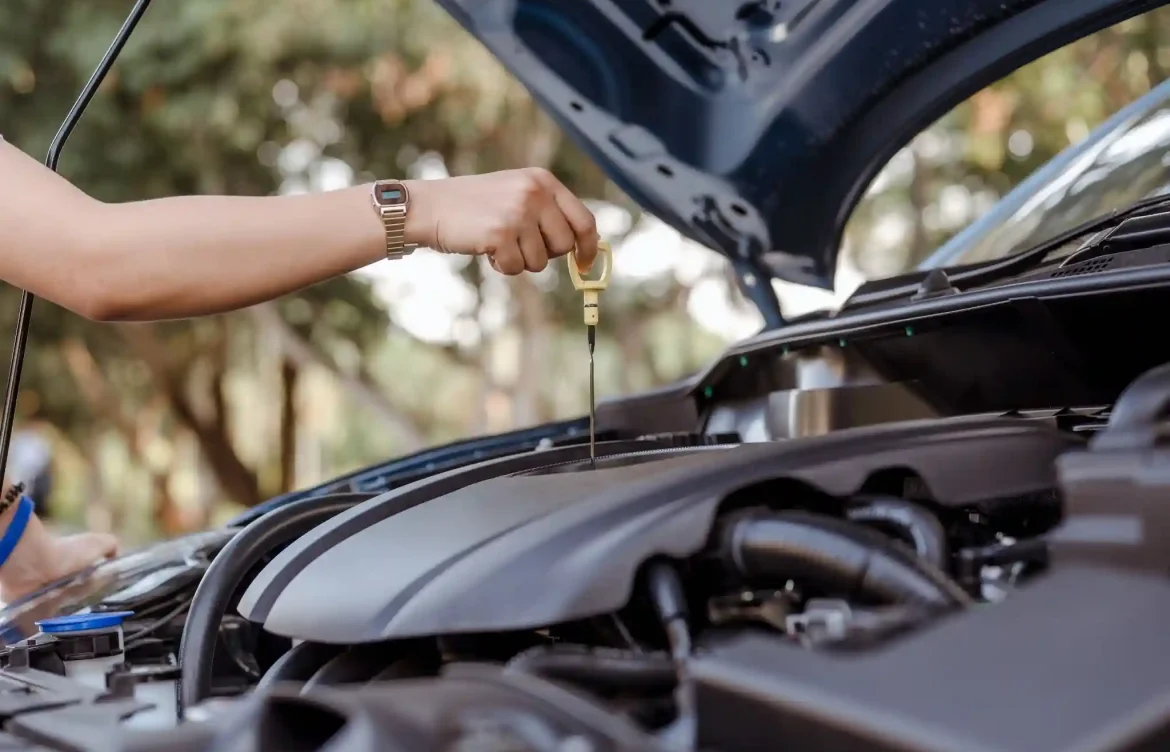
Automotive systems are deeply interdependent. A small problem in one component does not stay small for long when it is adjacent to other components that depend on it functioning correctly. Engine oil that is not changed on schedule thickens with combustion byproducts, loses its lubricating properties, and begins generating metal-on-metal friction inside the engine that produces wear at a rate that clean oil prevents entirely. That wear accumulates invisibly across thousands of miles until it manifests as a spun bearing, a scored cylinder wall, or an engine that consumes oil at a rate that signals the beginning of terminal internal damage. The oil change that was skipped to save forty dollars has now positioned the driver for a repair that begins at fifteen hundred dollars for a minor engine issue and extends to several thousand dollars or outright engine replacement for a major one. This pattern repeats across virtually every vehicle system. Neglected coolant becomes acidic and corrodes the cooling system from within. Worn brake pads allowed to reach metal-on-metal contact destroy rotors that would have been fine with a simple pad replacement. Ignored tire pressure differentials accelerate uneven wear that shortens tire life by thousands of miles.
The True Financial Impact of a Breakdown
The direct repair cost of a breakdown represents only part of its true financial impact. Roadside assistance fees, towing charges, rental car costs during repair periods, and lost productivity from missed work or obligations all add to the total cost of a breakdown in ways that never appear in the repair invoice but are entirely real. A breakdown that occurs at an inconvenient location, particularly on a highway or in an area without a trusted repair shop, adds the additional cost of emergency labor rates and the reduced negotiating position of a driver who needs their car repaired immediately rather than being able to seek competitive estimates. AAA’s annual research consistently shows that American drivers spend an average of several hundred dollars per year on unexpected repair costs that preventive maintenance would have significantly reduced or prevented entirely. The drivers in the best financial position with respect to their vehicles are consistently those who treat maintenance not as an optional expense but as a scheduled cost that eliminates the far larger unscheduled costs that follow from its absence.
What Preventive Car Maintenance Actually Includes
Many drivers have a vague sense that preventive maintenance means oil changes and tire rotations. The actual scope of preventive maintenance is broader, more systematic, and more consequential to vehicle longevity than this limited understanding suggests. Knowing what the full preventive maintenance picture includes is the foundation of making informed decisions about which services to prioritize and when.
Routine Services That Protect Your Engine Long-Term
The engine is the most expensive component in any vehicle and the one whose premature failure most definitively determines whether a car is worth repairing or has reached the end of its viable life. The routine services that protect engine health form the most financially important tier of preventive maintenance. Regular oil and filter changes at the interval specified by the manufacturer maintain the lubricating film that prevents metal contact between moving engine components. Air filter replacement ensures that the engine receives the clean air it needs for efficient combustion without the abrasive particles that bypass a clogged filter and enter the combustion chamber. Spark plug replacement at the manufacturer-specified interval maintains the ignition efficiency that prevents incomplete combustion, which places thermal stress on engine components and reduces fuel economy simultaneously. Coolant flush and replacement prevents the acidic degradation of aging coolant that corrodes cooling system components from within, leading to water pump failure, radiator damage, and in severe cases, head gasket failure from chronic overheating.
Often Overlooked Maintenance That Drivers Skip
Beyond the well-known routine services, a set of maintenance items is consistently deferred or forgotten by drivers who do not follow their manufacturer’s maintenance schedule systematically. These overlooked services are disproportionately responsible for the expensive surprise repairs that drivers experience. Transmission fluid service is perhaps the most consequentially neglected of these items. Modern transmissions are extraordinarily complex and expensive to repair or replace, with automatic transmission replacement costs routinely exceeding three thousand to five thousand dollars. Yet transmission fluid, which degrades with heat and use and loses its protective properties over time, is often left unchanged for far longer than manufacturer recommendations suggest. Differential fluid, power steering fluid, and brake fluid are similarly neglected despite each playing a critical protective role in the systems they serve. Cabin air filter replacement is the most easily overlooked maintenance item of all because its failure to be changed does not immediately affect vehicle performance, only the air quality inside the cabin and the efficiency of the HVAC system.
How Preventive Maintenance Directly Translates to Savings
The savings generated by consistent preventive maintenance operate through multiple financial mechanisms simultaneously. Reduced repair costs are the most obvious but not the only dimension of the financial benefit that well-maintained vehicles provide to their owners.
Fuel Efficiency and the Maintenance Connection
A vehicle that is properly maintained consistently uses less fuel than one that is not. The connection between maintenance and fuel economy is direct and measurable across multiple service categories. A dirty air filter restricts airflow to the engine, forcing it to work harder and consume more fuel to produce the same power output. Underinflated tires increase rolling resistance, requiring more engine power and therefore more fuel to maintain any given speed. Worn spark plugs that misfire waste fuel by failing to ignite the air-fuel mixture completely with every combustion cycle. Engine oil that has degraded past its useful service life increases internal friction that the engine must overcome at the cost of additional fuel consumption. The combined fuel economy impact of multiple neglected maintenance items can easily reach five to ten percent of fuel consumption, a cost that accumulates across every tank of fuel and every mile driven over months and years of deferred service.
How a Well-Maintained Car Holds Its Resale Value
Vehicle resale value is one of the most significant but least visible financial dimensions of car ownership. The difference in resale value between two identical vehicles, one with a complete documented maintenance history and one without, consistently reaches thousands of dollars at private sale and at trade-in. Buyers and dealers alike recognize that a vehicle with complete service records represents a known quantity whose mechanical condition can be assessed with confidence, while one without service documentation carries uncertainty about what has been deferred, neglected, or patched over. For drivers who replace their vehicles every five to seven years, this resale value difference effectively reduces the total cost of ownership for the well-maintained vehicle by an amount that often exceeds the entire cost of the maintenance services that created it.
Conclusion
Preventive car maintenance savings are not a promise made by service departments with an interest in your regular attendance. They are the predictable financial outcome of a simple principle: small planned costs prevent large unplanned ones. Every oil change performed on schedule is a bearing that does not fail. Every brake inspection completed is a rotor that does not need replacement. Every fluid service performed is a transmission that does not need rebuilding. The vehicle you maintain well rewards you with reliability, efficiency, retained value, and the particular peace of mind that comes from knowing you have protected something you depend on. The vehicle you neglect rewards you with the opposite of all those things. The choice between those two outcomes is made not in the repair shop but in the decision to schedule the appointment you have been putting off.